Enquiry Guides
Identify Your Wire Mesh Filtering Component
Filtering components can use similar-looking metal mesh. Begin with the complete form, supporting layers and installation interface to define the right enquiry.
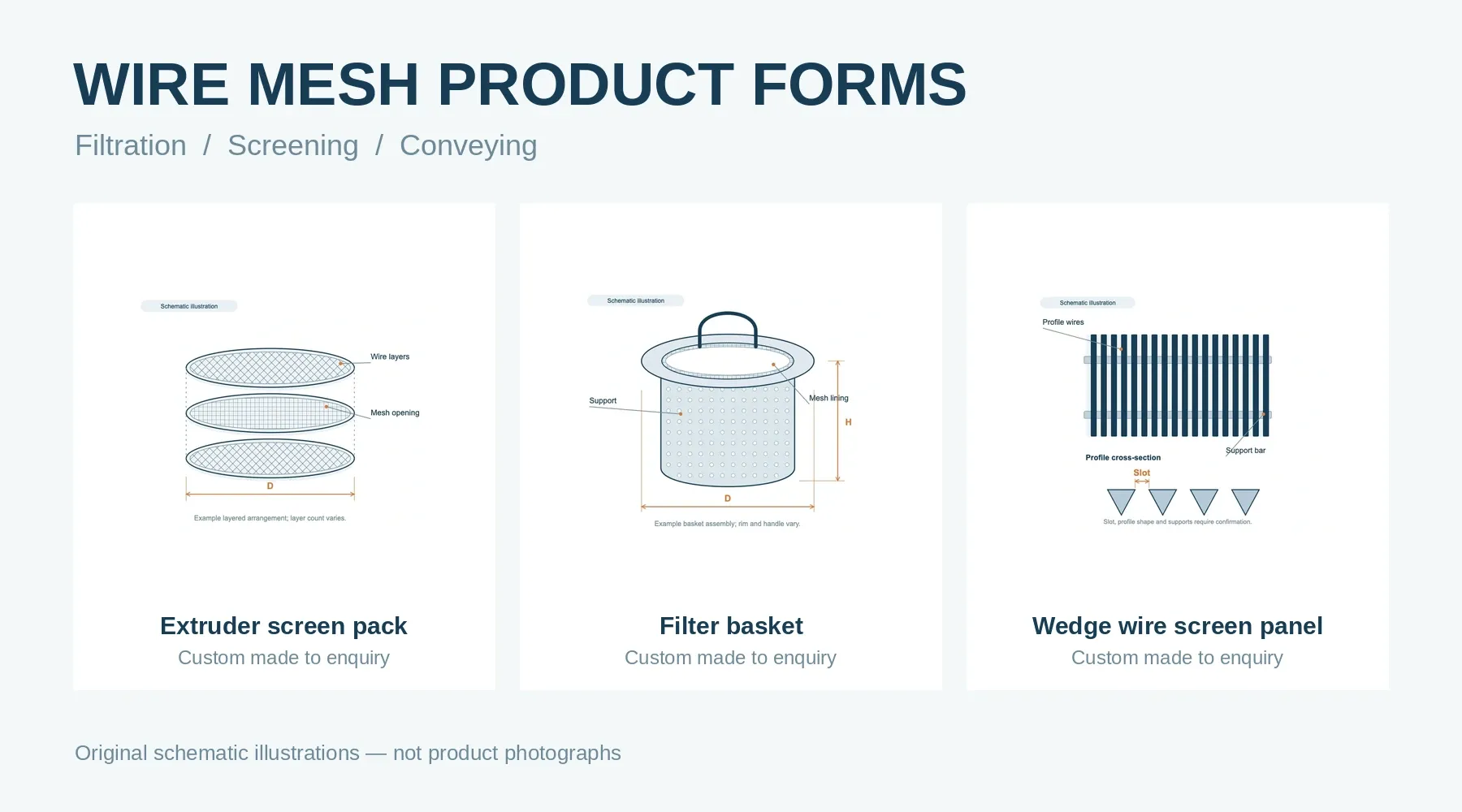
Name the complete component before you ask for a price. A filter basket, a screen pack, a cylinder, a cone strainer and a wedge wire panel can all carry similar-looking mesh, yet each is supplied, fitted and replaced as a different item.
This article shows you how to describe the whole part — outline, layers, supports and connections — so your enquiry starts from the evidence you already have: a drawing or clear photographs, the dimensions you know, and a note of how the part sits in its housing.
Picture the replacement arriving with the mesh looking right, yet the part refusing to seat. This guide fits you if you hold the old part, a drawing, or only the housing. It does not fit a request for a rating, a grade or a price from mesh data alone.
When the Replacement Arrives and Does Not Fit
Your line stops for a planned screen change. The new part arrives in a crate, the mesh looks right, and the fitter lifts it toward the housing. The rim will not seat, and the holes for the fixing do not line up.
The part goes back into the crate, and the old screen goes back into the machine for one more run it was never meant to make. The enquiry starts again, with photographs of the seating area that should have travelled with the first message.
The same failure takes other shapes. A screen pack arrives as loose layers when the changer needs one joined piece, so the stack cannot be loaded as a unit. A basket arrives without its handle, and nobody can lift it out of a housing. A cone arrives without its mounting ring, and the pipe flange has nothing to bolt to.
In each case the mesh itself was not the problem. The mesh did the filtering it was asked to do. What failed was the description around it: the outline, the edge, the supports and the connection were never written down, so the supplier built the filtering surface and guessed the rest.
Why the Mesh Alone Cannot Identify the Part
A filtering component is an assembly, not a piece of mesh. The mesh sets the filtration level, and everything around it decides whether the part can be installed, held in place and removed again. Two parts with the same mesh can differ in every other respect: outline, layers, edge, supports and connections.
Take a flat screen and a multilayer screen pack. One is a single layer cut to shape; the other is a stack in which a coarser support layer carries the pack and finer layers do the filtration.
The layers may be loose, joined at points so the stack loads as one piece, or held by an edge construction. Without the outline, the side profile and the layer arrangement, a supplier cannot tell which of the three you need.
A woven screen panel and a self-cleaning replacement screen can look alike from the front. The woven panel has square openings in crimped wire and hook edges for the screening equipment, with no polyurethane strips. The self-cleaning screen uses anti-blinding wire patterns and may carry support strips. Photographs of the surface and edges usually make the type clear.
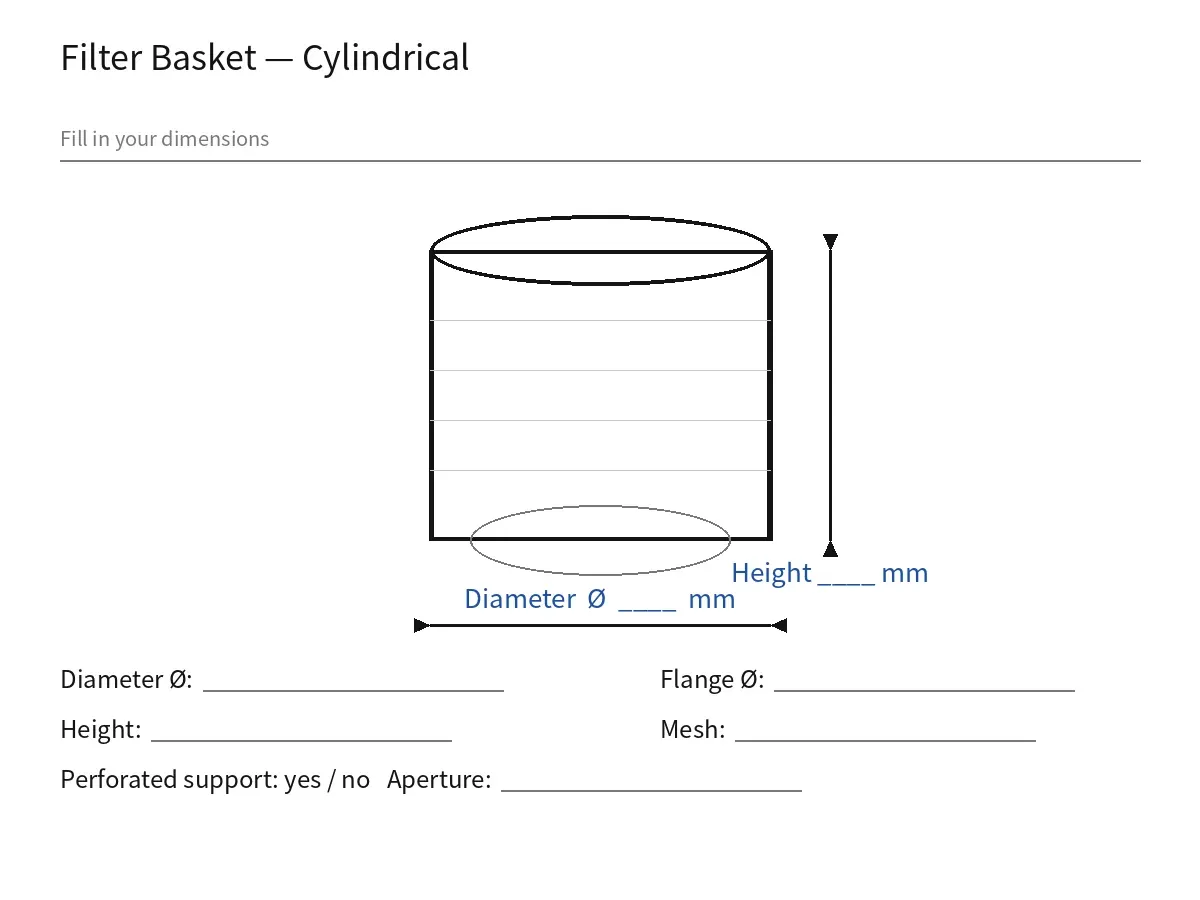
A filter basket adds installation features to the filtering surface: a body, a rim or flange, a handle, a shaped bottom. The filtering mesh and the perforated supporting body are two different layers, and they must be described separately.
The openings in the support do not by themselves specify the filtering layer. A photograph of the complete basket and a view of its seating area show how those features relate.
A filter cylinder needs its body, both ends and the joining area shown. End caps, rims or other connections decide how it mounts.
A cylinder can take several forms: a woven mesh outer layer over a perforated inner support, a sintered-metal body for finer filtration, or a pleated element where more filtering area must fit the same housing. Describe the mesh lining and the supporting body separately, as you would for a basket.
A cone strainer needs the whole conical component and its mounting ring shown together. Three forms cover most enquiries: the standard cone with its point facing upstream, a truncated basket-type cone with more open area, and a flat plate where a cone does not fit.
The filtering surface is perforated plate or wire mesh, with a separate supporting layer where the duty calls for one. State whether the requirement covers the cone alone or additional assembly parts.
Read wedge wire components as a pair: the slot surface and the supporting arrangement belong together. For a flat panel, show the working face, the reverse supports and the frame, and say whether the supply is the screen surface alone or a panel with a frame.
For a cylinder, include both ends and explain the working side and the flow direction, because the direction decides the form: outside-to-in for a spiral-wound cylinder, inside-to-out for a seam-welded one.
Decide What to Send for Your Form
You can decide what to send right now, from what you already hold. The choice depends on which of four starting points you are at: the old part in hand, a drawing, the housing it fits into, or only a product name. Each starting point has a different first move, and none needs a complete specification.
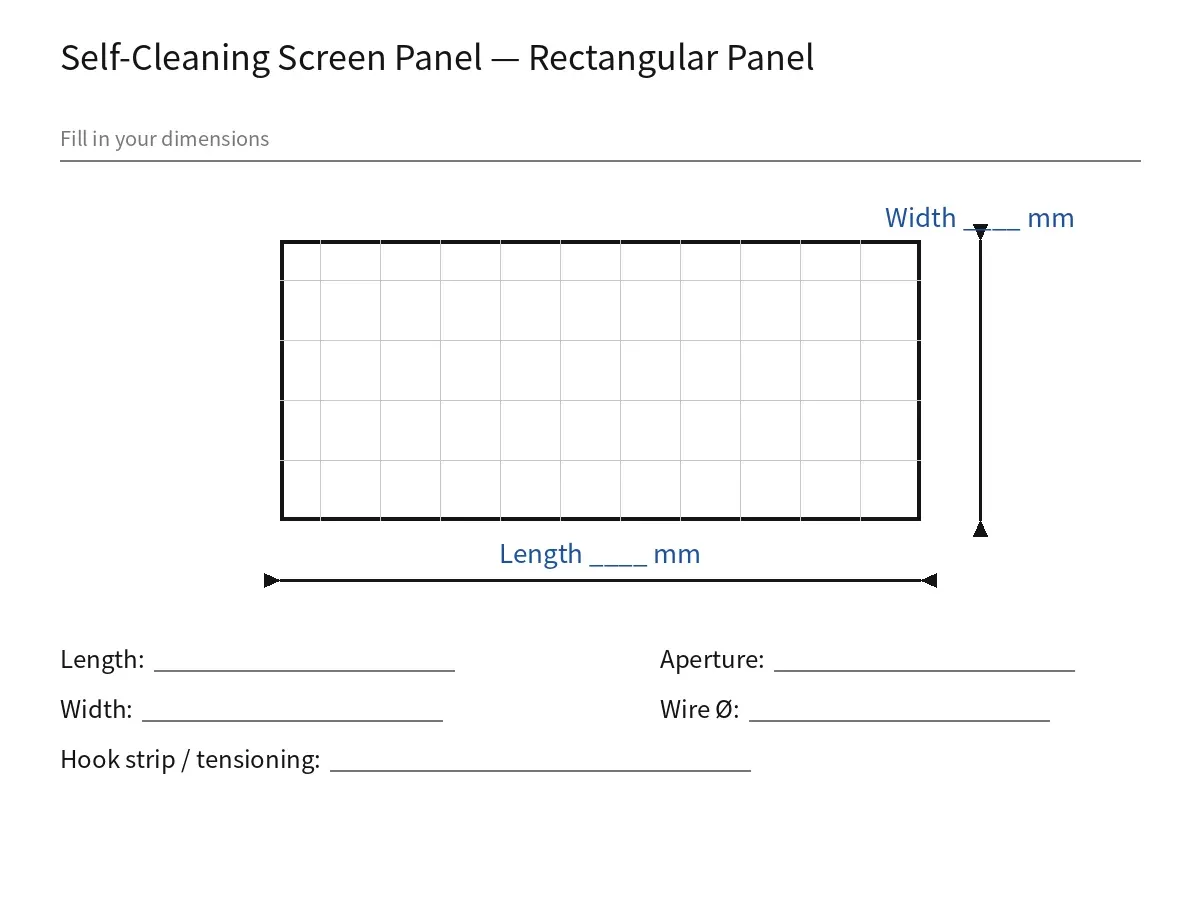
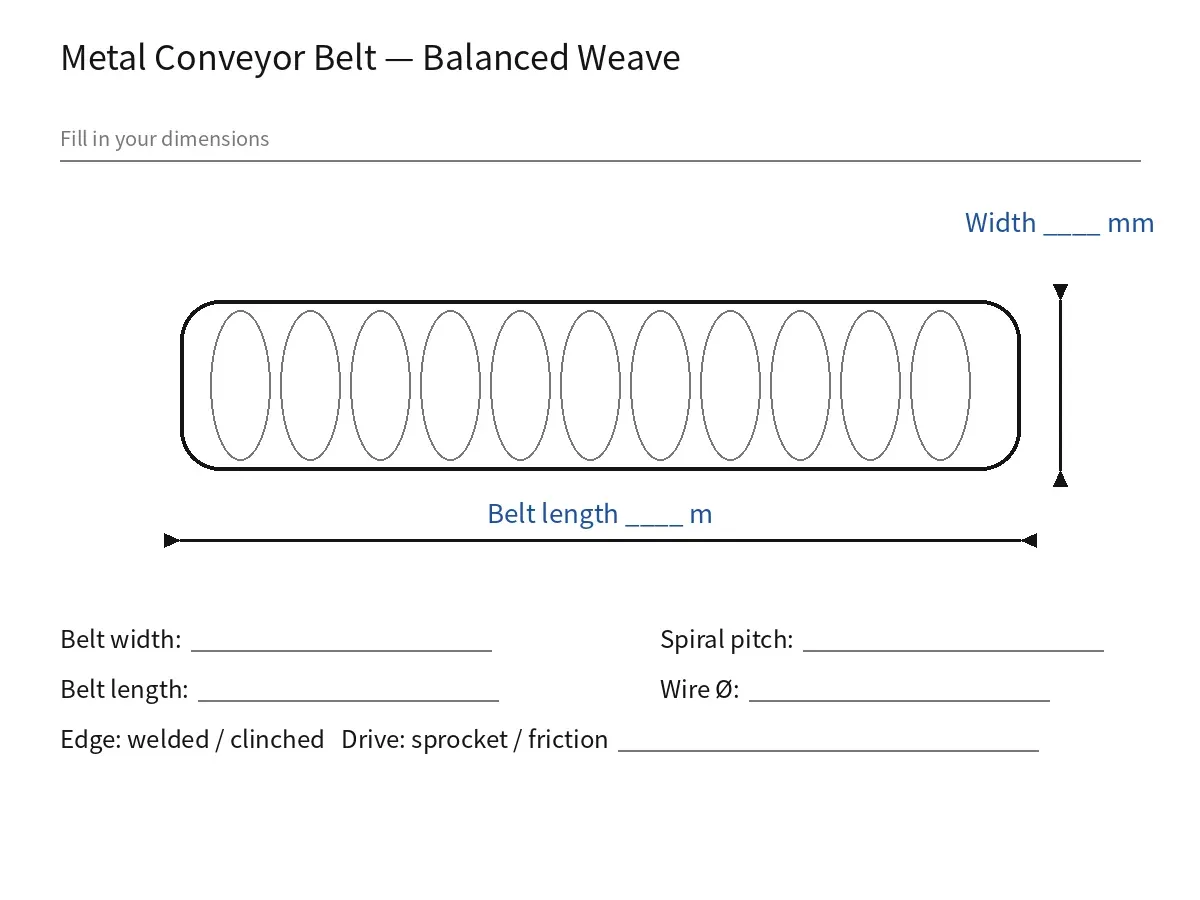
If you hold the old part, photograph the complete component first, then its seating area, its ends and its connections. Measure the outline dimensions you can reach and write them with their units, and note where each measurement was taken. Mark the dimensions on the blank dimension drawing, and leave any field you cannot measure blank rather than guessing.
If you have a drawing, send the drawing itself instead of retyping it. Add a photograph of the installed part if one exists, and note the quantity and the application in your own words. A drawing with a photograph of the seating area answers most questions a mesh specification alone cannot.
If you have only the housing, measure the seating area: the opening the part drops into, the depth it sits at, and the fixing points it must meet. Photograph the housing from above and from the side, and describe the fluid or material that passes through it. The housing dimensions set the outline even when the old part is gone.
If you know only a product name, say so plainly and describe the complete item instead of the name. A shape name helps organise the enquiry, but the installation interface still needs to be described, and the photograph, the drawing and the proposed supply scope must all refer to the same item.
Whichever starting point you are at, the same ten fields complete the picture: the form or supplied component, the main dimensions with units, the material if known, and the filter layers with their support structure.
Add the open or closed ends with connection and seal details, the seam or weld arrangement, the mesh opening and wire diameter, the filtration rating with its method, and the medium with its flow, temperature and differential pressure. Complete what you know and leave the rest blank.
What This Check Cannot Prove
A shape name is a starting point, not a specification. Calling a part a basket, a cylinder or a cone helps organise the enquiry, but it does not fix the outline, the supports or the connections.
Two baskets with the same name can differ in rim, handle and bottom, and a supplier who works from the name alone will guess the parts you did not describe.
A mesh count alone is not a filtration rating. Send the original micron value with its description rather than converting it into a mesh count, and say whether the rating is nominal or absolute and how it was measured.
The openings in a supporting body do not specify the filtering layer either, so describe the mesh lining and the support as two separate items.
A machine model alone may not identify the replacement. The same machine can carry different screen forms across its production years, and a part number without a photograph of the panel and its edges still leaves the outline open. Treat the model as a clue, not as the identification.
Some boundaries stay open until the part is reviewed. Suitability and supply scope are confirmed after a technical review, not at the enquiry stage, and a description that fits one housing may not fit another with the same mesh.
If your installation differs from the standard form — a curved panel, an unusual end connection, a housing with no drawing — say so in the enquiry instead of forcing the part into a standard shape.
Send What You Have Now
Send the information you already have: the available drawing or photographs, the quantity, and the application details. Use the custom enquiry form and fill in what you know.
That means your contact name and email, the product or application, a brief requirement, your company if it helps, the quantity with its unit, the dimensions, material or operating details you know, and a requested delivery date if you have one.
The form has no file upload, so send drawings and sample photographs by email to sales@anpingmeshpro.com, with the same contact name and product reference you used in the form. Include the units on every dimension and mark any dimension that is critical to the fit.
What you send now decides what comes back: a complete description gets a discussion about the right part, while a mesh figure alone gets a round of questions. Discuss your filtering component with Anping Mesh Pro through the custom enquiry page, and start from the part you can already describe. Leo Li will reply within 1 working day.