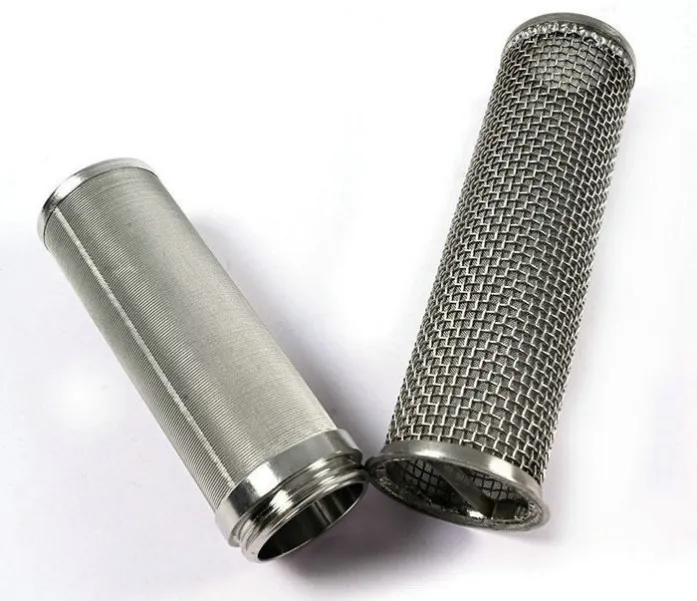
Filter Cylinders and Cone Strainers
Custom Cone Strainers
Discuss conical straining components with the required body shape, filtering mesh, support and mounting ring or connection. Start with a drawing or sample reference.
Specifications
- Size
- 1"–12" (25–300 mm); larger sizes on enquiry
- Mesh options
- Perforated stainless plate 1/32"–1/2"; stainless wire mesh 20–400 mesh
- Pressure
- Up to Class 2500lb+ (172 BarG+)
- Standard open area ratio (OAR)
- 100%–300%
- Flange rings
- BS10, BS4504, ANSI B16.5, B16.47, AWWA C207, ASME, EN1092, DIN, NFE, JIS and other standards
- Forms
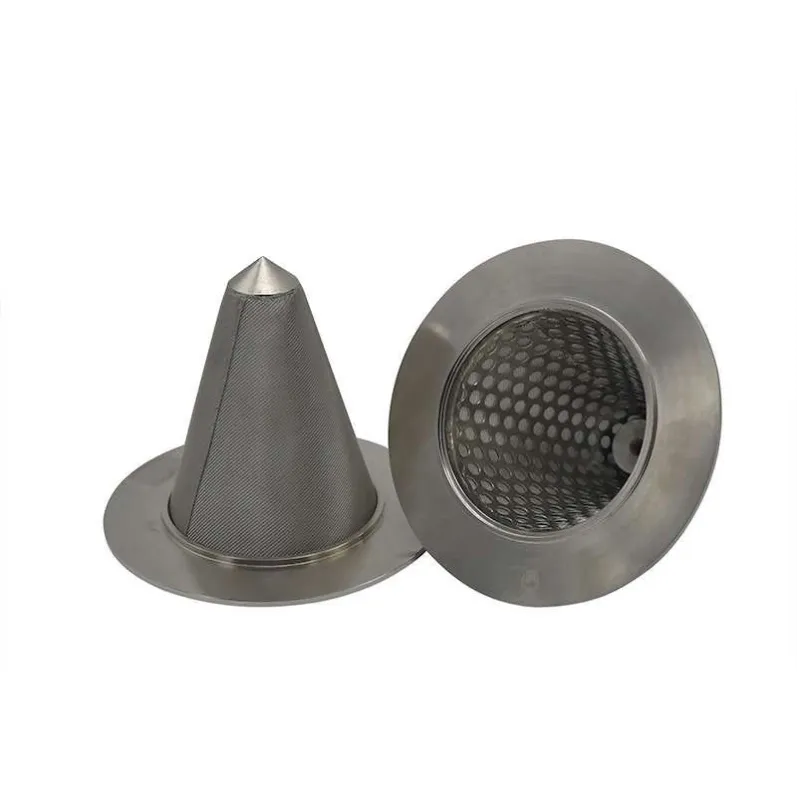
- Conical "witch's hat" / basket-type truncated cone "pilgrim hat" / flat plate
- Materials to discuss
- Carbon steel, SS 304 / 316 / 316L, alloy steel, duplex / super duplex, nickel alloys (Monel, Inconel, Hastelloy) — by process fluid, temperature, pressure and corrosion
# Cone strainers, made to your pipeline-protection duty
## The challenge
A cone strainer is temporary in-line filtration: it protects downstream equipment during system commissioning, start-up and short-term service. Start-up debris in a new pipeline — welding slag, scale, construction debris — can damage pumps, valves and instruments in the first hours of operation.
The honest point about a cone strainer: it is a temporary part. Once the line is flushed and clean, the cone should be removed. Long-term filtration belongs to a basket strainer, a Y-type strainer or a duplex strainer — not to a cone left in the line.
## Our approach
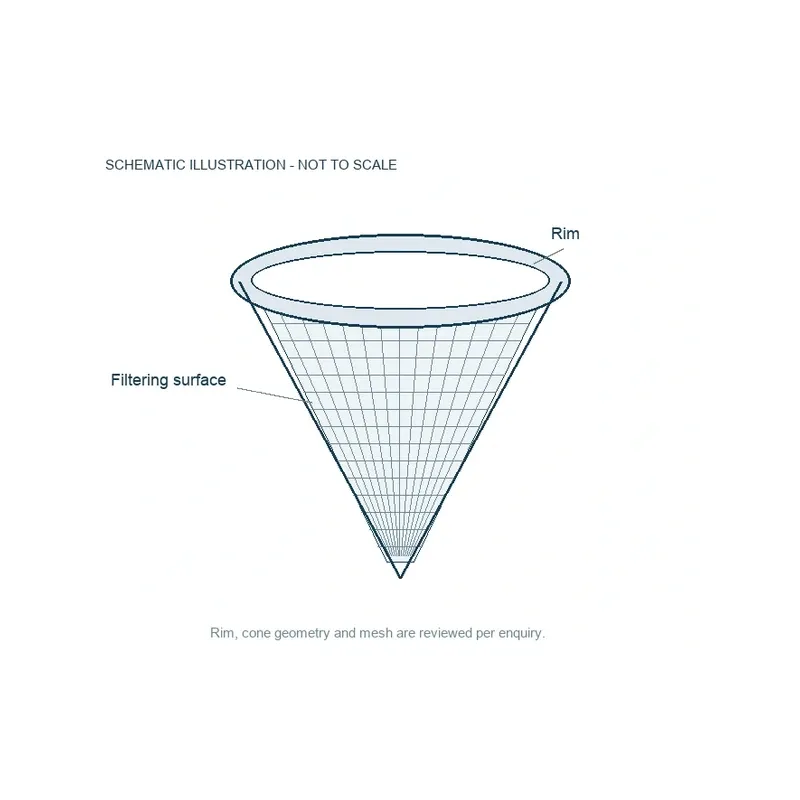
We supply custom cone strainers from Anping, China. Each cone is made to order: the cone body shape and dimensions, filtering mesh and supporting layer, seam and joining details, mounting ring or connection, and installation and service conditions are matched to the pipeline it protects and the debris it has to catch.
Three forms to discuss (pick the one closest to your current part):
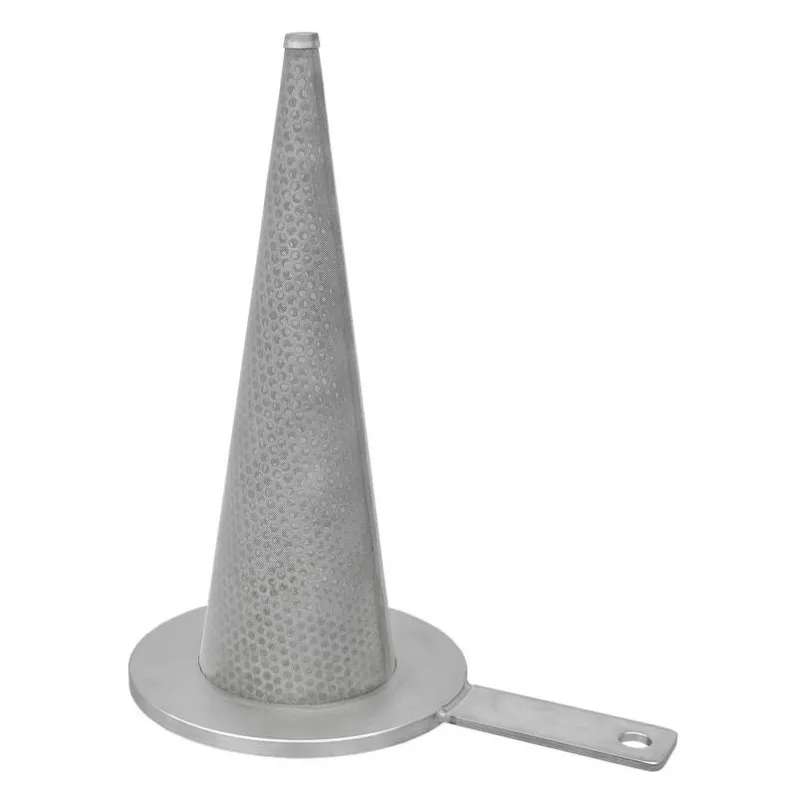
- Conical "witch's hat" — the standard cone, point facing upstream.
- Basket-type truncated cone, "pilgrim hat" — a truncated cone with more open area for higher dirt-holding capacity.
- Flat plate — a flat straining plate where a cone does not fit.
The filtering surface is perforated stainless plate or stainless wire mesh, with a separate supporting layer where the duty calls for one. Material follows the process fluid, temperature, pressure and corrosion requirements.
## Typical range
Final specification is confirmed per order / drawing. The ranges below are industry-common values from public supplier pages — they show what to discuss, not what we promise off the shelf.
| Item | Typical range |
|---|---|
| Size | 1"–12" (25–300 mm); larger sizes on enquiry |
| Mesh options | Perforated stainless plate 1/32"–1/2"; stainless wire mesh 20–400 mesh |
| Pressure | Up to Class 2500lb+ (172 BarG+) |
| Standard open area ratio (OAR) | 100%–300% |
| Flange rings | BS10, BS4504, ANSI B16.5, B16.47, AWWA C207, ASME, EN1092, DIN, NFE, JIS and other standards |
| Forms | Conical "witch's hat" / basket-type truncated cone "pilgrim hat" / flat plate |
| Materials to discuss | Carbon steel, SS 304 / 316 / 316L, alloy steel, duplex / super duplex, nickel alloys (Monel, Inconel, Hastelloy) — by process fluid, temperature, pressure and corrosion |
Sources for the ranges: Hydrotherms conical strainer page (public values). Our factory-confirmed cone sizes and mesh ranges are still pending — final specification confirmed against your drawing / sample.
## What this helps with
- **Temporary protection where it matters** — the cone catches start-up debris before it reaches pumps, valves and instruments.
- **A clear end to the job** — the cone is removed once the line is flushed and clean, so it never becomes a permanent restriction in the pipeline.
- **The right form for the duty** — cone, truncated cone or flat plate, chosen by the space available and the dirt load expected.
No flow or pressure-drop figures are promised here: the result depends on the fluid, the debris load and the installation. The ranges in §3 and the questions in §6 are how we get to a cone that fits your duty.
## Typical applications
- **Chemical and pharmaceutical** — temporary pipeline filtration before commissioning, catching flushing debris ahead of sensitive equipment.
- **New pipeline start-up** — cone strainers installed for commissioning and start-up, then removed once the line is clean.
- **Water treatment** — temporary strainers protecting pumps and instruments during start-up.
- **Any new system** — where the first hours of operation carry the highest debris risk.
Each application links back to the same enquiry: cone shape, mesh and support, mounting ring, installation and service conditions.
## Next step
Send the information you already have — a drawing or sample photographs showing the cone body, mounting ring or connection and joining details, or a sample part. These six questions are what we ask next:
1. Cone shape and dimensions — main diameters and overall length.
2. Filtering mesh and supporting layer — perforated plate or wire mesh, opening / mesh size.
3. Mounting ring or connection — flange standard, if known.
4. Installation and service conditions — where installed, fluid, temperature, pressure.
5. Supply scope — cone only, cone and mounting ring, or a larger assembly.
6. Temporary or permanent duty — commissioning / start-up protection, or long-term filtration (long-term duty uses a basket, Y-type or duplex strainer instead).
Tools to send with your enquiry:
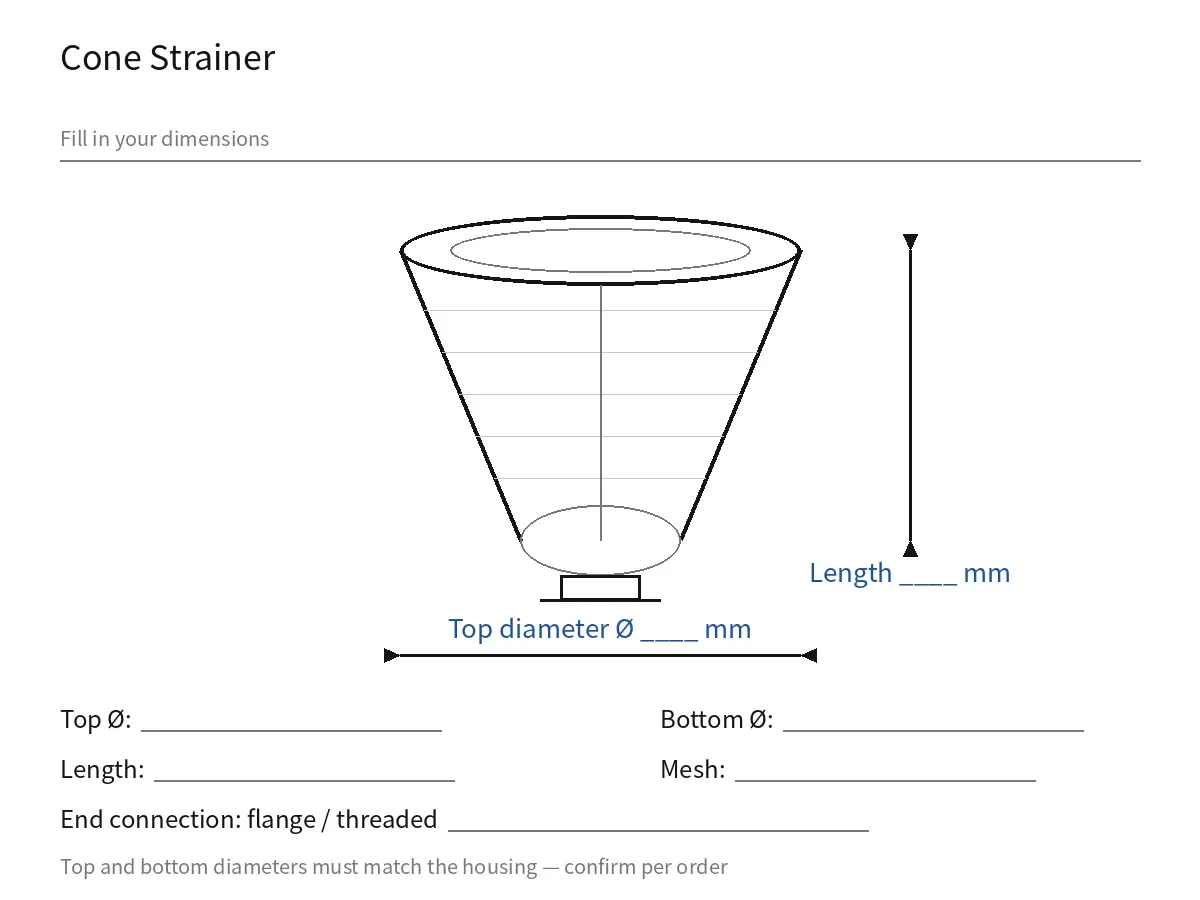
- **Blank dimension drawing** `blank-dimension-P04-cone.png` — fill in top and bottom diameter, length, mesh count and end connection and send it back.
- **RFQ sheet** (P04) — the same fields as a PDF, for buyers who prefer a form.
- **Sample** — samples are available on request; availability, fee and lead time depend on the product, size and quantity — send your specification and we will confirm. Standard sizes can usually be supplied quickly; custom sizes are made to your drawing.
Enquiry email: sales@anpingmeshpro.com — or use the enquiry form. We reply with the next details needed before a quotation is prepared.
## Customisation Topics
- Cone body shape and dimensions
- Filtering mesh and supporting layer
- Seam and joining details
- Mounting ring or connection
- Installation and service conditions
## Questions About This Product
### What should I show first in a cone-strainer enquiry?
Start with the complete cone and its mounting connection. Add close views of the filtering surface, support and joining details.
### Do I need a complete manufacturing drawing?
You can start with a sample reference, photographs or a sketch of the known dimensions. Any further information required for the quotation can then be discussed.
### How should I describe the required supply scope?
State whether you need the cone only, the cone and mounting ring, or a larger assembly. Mark those parts on the drawing or photograph if possible.
## Discuss Your Requirement
Send complete-cone and mounting-connection views, with a dimensional sketch, intended use and quantity if known. Email drawings or sample photographs to [sales@anpingmeshpro.com](mailto:sales@anpingmeshpro.com).