
Metal Conveyor Belts
Custom Metal Conveyor Belts
Discuss metal conveyor belts for replacement or new applications. Identify the wire pattern, belt dimensions, edge and joining construction, and drive arrangement.
Specifications
- Balanced weave — spiral pitch
- 2.8–40 mm
- Balanced weave — cross-rod pitch
- 5–50.8 mm
- Balanced weave — round wire
- 0.9–3.2 mm
- Balanced weave — flat wire
- 1.0×0.7–6.0×3.0 mm
- Balanced weave — belt width
- 200–5000 mm
- Balanced weave — temperature
- −60–1200 °C
- Compound weave — pitch
- 6–20 mm
- Compound weave — belt width
- 200–3000 mm
- Materials to discuss
- SUS304 / SUS316 / low-carbon steel — by application
- Edges
- Welded or curled
- Drive
- Sprocket / friction
# Metal conveyor belts, made to your conveying duty
## The challenge
A conveyor belt that tracks poorly, stretches, or traps product costs line time. The wrong weave for the temperature or the load shortens belt life; the wrong edge or joint fails first; a belt that cannot be cleaned properly becomes a hygiene problem on a food line.
A belt enquiry is therefore not one number — it is the weave, the wire, the pitch, the edges, the joints and the drive, all matched to what the belt carries and where it runs.
## Our approach
We supply custom metal conveyor belts from Anping, China. Each belt is made to order: the wire arrangement, belt dimensions, edge treatment, joints and drive connection are matched to the process it runs in.
Two weave families to discuss (pick the one closest to your current belt):
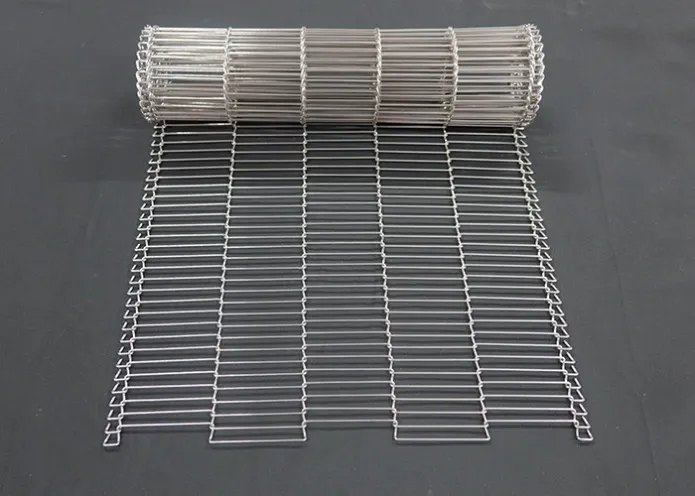
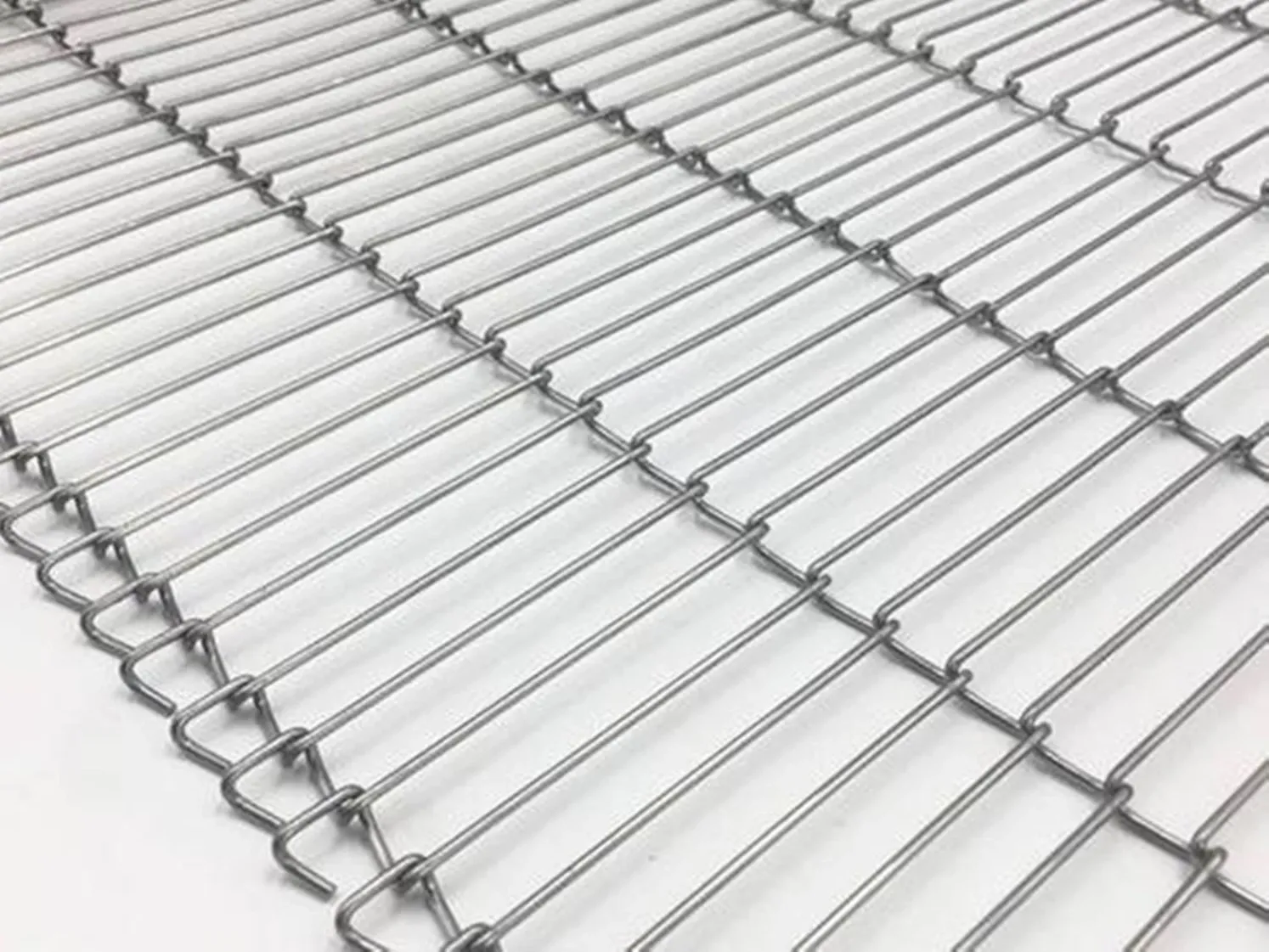
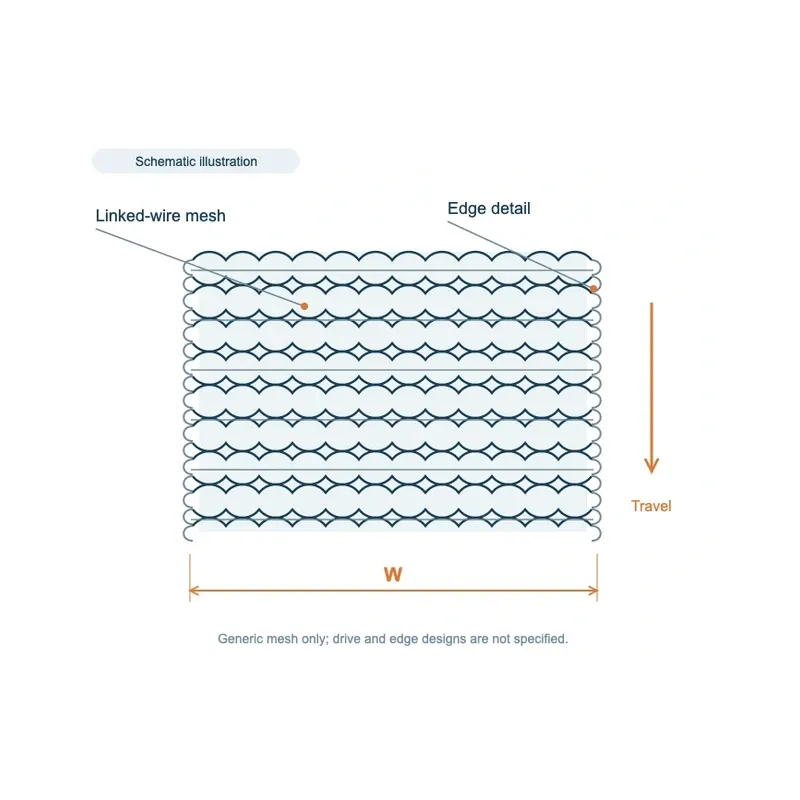
- Balanced weave — spiral wires alternating left and right, with cross rods; the general-purpose belt, dimensionally stable on long runs and under changing temperature.
- Compound weave — a tighter, heavier construction for fine, small or top-heavy products and for duties where a balanced weave is not enough.
Edges are welded or curled; drive is by sprocket or by friction. Belt pattern, wire and rod arrangement, edges, joints and the drive interface are reviewed as a connected requirement — where pitch measurements are supplied, a marked photograph or drawing helps show exactly which points were measured.
## Typical range
Final specification is confirmed per order / drawing. The ranges below are industry-common values from public supplier pages — they show what to discuss, not what we promise off the shelf.
| Item | Typical range |
|---|---|
| Balanced weave — spiral pitch | 2.8–40 mm |
| Balanced weave — cross-rod pitch | 5–50.8 mm |
| Balanced weave — round wire | 0.9–3.2 mm |
| Balanced weave — flat wire | 1.0×0.7–6.0×3.0 mm |
| Balanced weave — belt width | 200–5000 mm |
| Balanced weave — temperature | −60–1200 °C |
| Compound weave — pitch | 6–20 mm |
| Compound weave — belt width | 200–3000 mm |
| Materials to discuss | SUS304 / SUS316 / low-carbon steel — by application |
| Edges | Welded or curled |
| Drive | Sprocket / friction |
Sources for the ranges: Lanto, JBL Mesh Belt (2026-10-06 technical specification PDF), YIYI. Our factory-confirmed wire, pitch and width ranges are still pending — final specification confirmed against your drawing / sample.
## What this helps with
- **Stable tracking on long runs** — the balanced weave holds its dimensions under changing temperature, so the belt runs true instead of drifting.
- **Open area where the process needs it** — the mesh lets heat, cold, air or liquid through the belt, so heating, cooling, drying and draining happen on the belt itself.
- **Cleanable construction** — an open wire construction drains and cleans, with no hidden pockets where product collects.
No belt-life or speed figures are promised here: the result depends on the temperature, load, speed and cleaning conditions. The ranges in §3 and the questions in §6 are how we get to a belt that fits your duty.
## Typical applications
- **Food and beverage processing** — baking, cooling, frying, washing lines; also coating, freezing, enrobing and sterilising.
- **Bakery and confectionery** — dough handling, baking and cooling belts where an open mesh matters.
- **Automotive, pharmaceutical and industrial drying** — heating and drying lines, and conveying where temperature or cleanliness decides the belt.
Each application links back to the same enquiry: weave, belt dimensions, pitch, wire, edges, joints and drive.
## Next step
Send the information you already have — photographs of the belt surface, both edges, the joining area and the drive arrangement, or a drawing. These seven questions are what we ask next. State first whether this is a new application or a replacement belt:
1. Belt type / weave — balanced, compound, or a photo of the current belt.
2. Belt width and length — and whether the length is an open belt, an endless belt, or another measurement basis.
3. Spiral pitch and wire / rod sizes.
4. Edge treatment and joints.
5. Drive — sprocket or friction; sprocket details if sprockets are included.
6. What is conveyed and the process — temperature, load, speed, cleaning conditions.
7. A photo of the current belt — surface, both edges, joining area and drive arrangement.
Tools to send with your enquiry:
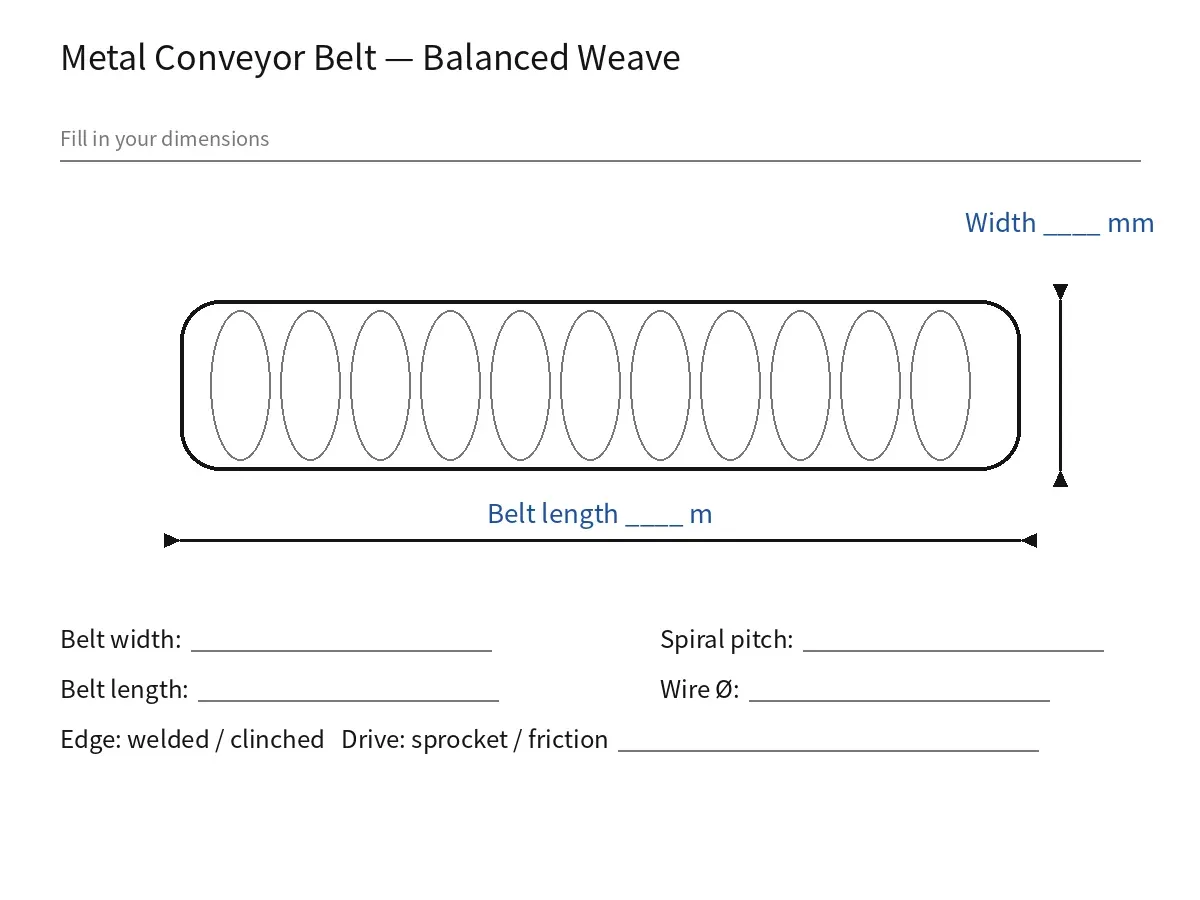
- **Blank dimension drawing** `blank-dimension-C01-belt.png` — fill in belt width, belt length, spiral pitch, wire diameter, edge and drive and send it back.
- **RFQ sheet** (C01) — the same fields as a PDF, for buyers who prefer a form.
- **Sample** — samples are available on request; availability, fee and lead time depend on the product, size and quantity — send your specification and we will confirm. Standard sizes can usually be supplied quickly; custom sizes are made to your drawing.
Enquiry email: sales@anpingmeshpro.com — or use the enquiry form. We reply with the next details needed before a quotation is prepared.
## Customisation Topics
- Belt construction and wire arrangement
- Width, length and measurement basis
- Wire and rod details
- Edges and joining area
- Drive connection and application conditions
## Questions About This Product
### Which photographs are most useful for a replacement belt?
Show the belt surface, both edges, the joining area and the drive arrangement. An overall view helps connect those details to the same belt.
### How should I give the belt length?
Give the value and units, and explain whether you measured an open belt, an endless belt or another reference. Include a sketch if the measurement basis needs explaining.
### Can I include sprockets or other components in the enquiry?
State clearly which components are required and include their photographs or drawings. Their scope and connection to the belt can then be reviewed separately.
## Discuss Your Requirement
Send belt-surface, edge, joint and drive photographs. Add dimensions and the process conditions you already know. Email drawings or sample photographs to [sales@anpingmeshpro.com](mailto:sales@anpingmeshpro.com).