Wedge Wire Components
Custom Wedge Wire Screen Cylinders
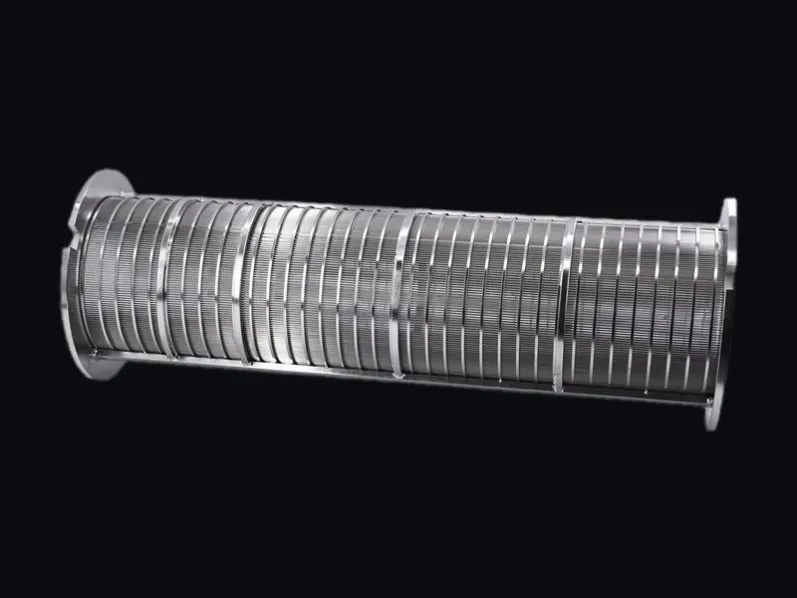
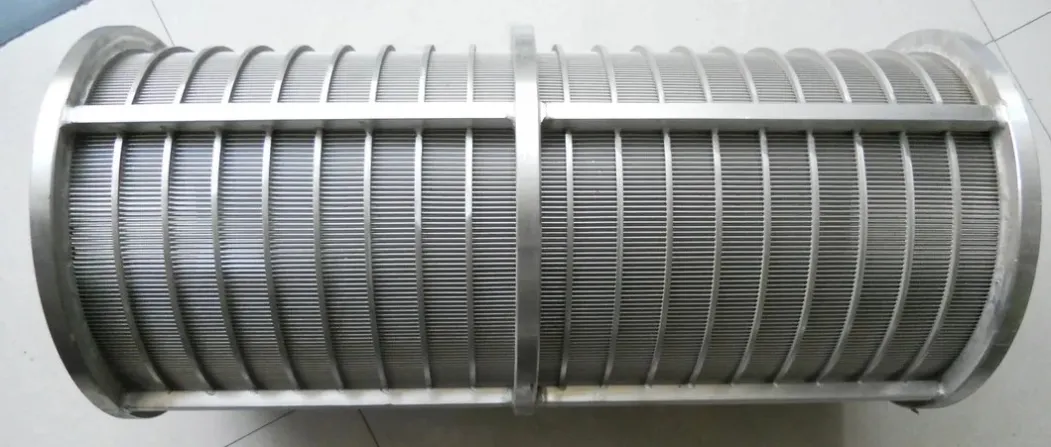
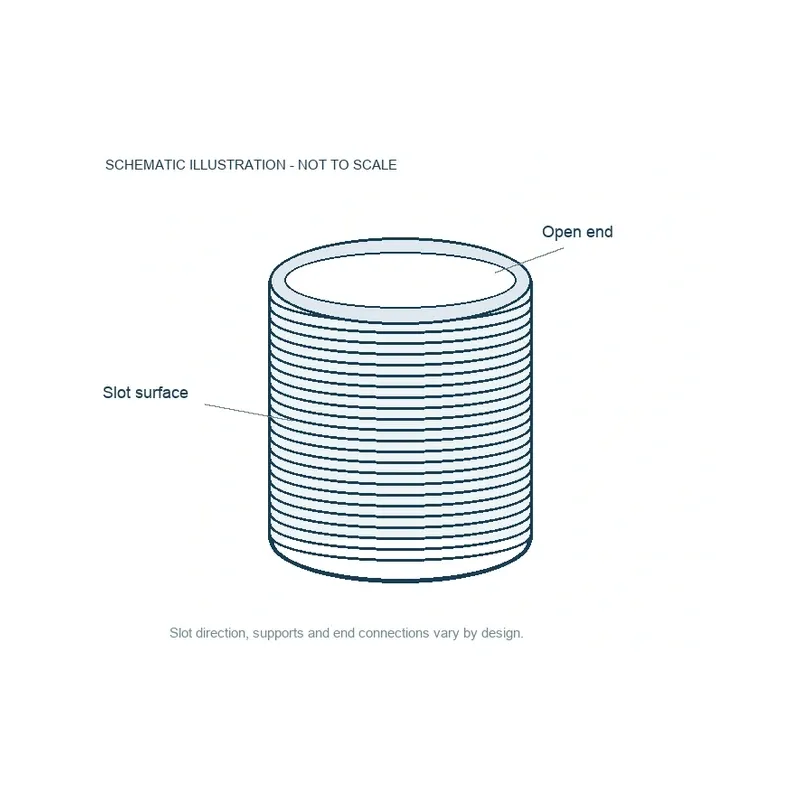
Discuss cylindrical wedge wire components with defined slot surfaces, supports and end connections. Identify the working side, flow direction and installation interface.
Specifications
- Slot width
- 0.025–100 mm (commonly 0.05–10 mm; Johnson Slot tolerance ±0.01 mm)
- Cylinder OD
- 10–1200 mm; length up to 6 m (standard 2.9 / 5.8 m container sizes)
- Spiral-wound (FOTI)
- Slot from 0.05 mm; OD 20–1330 mm; length 50–6000 mm
- Re-roll seam-welded (FITO)
- Slot from 0.05 mm; ID 90–2500 mm; length 100–3000 mm
- Profile wire
- 1×2–3×6 mm
- Support rods
- 2×3–3×6 mm (round / triangular / rectangular)
- Materials to discuss
- 304 / 316L / 430 / duplex stainless steel, others on request — by application
# Wedge wire screen cylinders, made to your separation duty
## The challenge
A wedge wire cylinder has to hold three things at once: its slot, its shape, and its flow direction. If the slot varies, the cut point moves. If the cylinder goes out of round under flow or pressure, the slot varies with it. And if the working side is the wrong way round — flow outside-to-in when the duty needs inside-to-out, or the reverse — the cylinder blinds or bypasses instead of separating.
Overall diameter and length alone do not describe the complete replacement: the slot surface, the supports and the end connections are part of the same component.
## Our approach
We supply custom wedge wire screen cylinders from Anping, China. Each cylinder is made to order: the diameter, length and body form, slot requirement and arrangement, internal or external supports, end rings, flanges and connections, and working side and flow direction are matched to the separation task and the installation position.
Two cylinder forms to discuss (the flow direction decides the form):
- Spiral-wound cylinder — flow outside-to-in (FOTI): the process fluid meets the outside of the cylinder and passes inward.
- Re-roll seam-welded cylinder — flow inside-to-out (FITO): the process fluid meets the inside of the cylinder and passes outward.
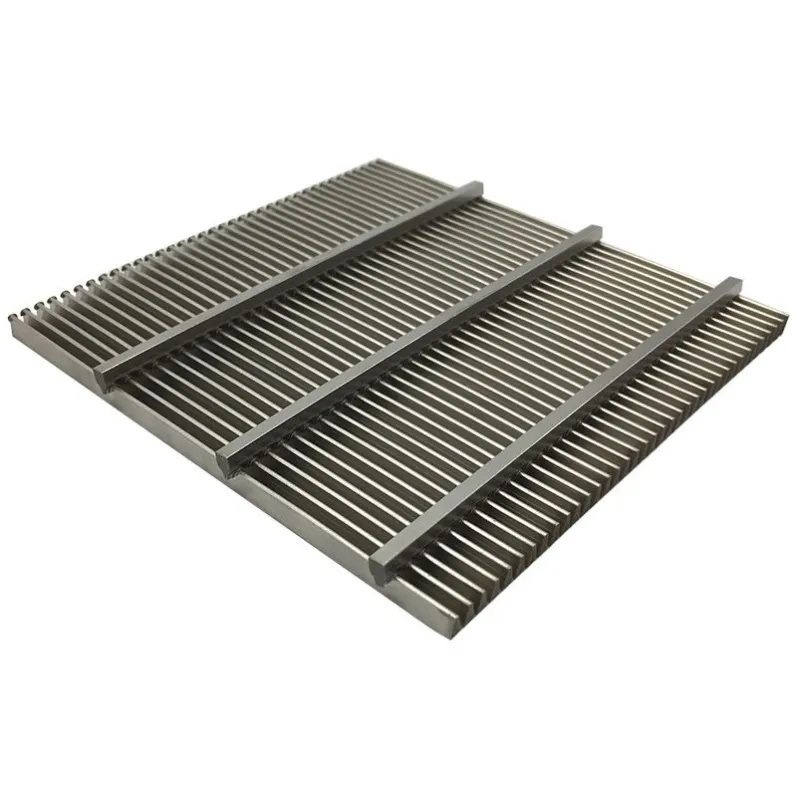
The slot is the same tapered slot as on a flat panel: it opens downward, so it resists blinding and is easy to backwash. Profile wire and support rods are the same discussion as on the panel — slot sets the cut point, profile wire sets the strength, support rods set the rigidity.
## Typical range
Final specification is confirmed per order / drawing. The ranges below are industry-common values from public supplier pages — they show what to discuss, not what we promise off the shelf.
| Item | Typical range |
|---|---|
| Slot width | 0.025–100 mm (commonly 0.05–10 mm; Johnson Slot tolerance ±0.01 mm) |
| Cylinder OD | 10–1200 mm; length up to 6 m (standard 2.9 / 5.8 m container sizes) |
| Spiral-wound (FOTI) | Slot from 0.05 mm; OD 20–1330 mm; length 50–6000 mm |
| Re-roll seam-welded (FITO) | Slot from 0.05 mm; ID 90–2500 mm; length 100–3000 mm |
| Profile wire | 1×2–3×6 mm |
| Support rods | 2×3–3×6 mm (round / triangular / rectangular) |
| Materials to discuss | 304 / 316L / 430 / duplex stainless steel, others on request — by application |
Sources for the ranges: Anping Xinlu, Johnson Slot (Hebei Slot Filter, Anping), Hengyuan, Optima specification guide (public pages). Our factory-confirmed diameter and length ranges are still pending — final specification confirmed against your drawing / sample.
## What this helps with
- **A defined slot surface, with the flow direction matched** — the cylinder separates on its slot, and the working side is set by the duty, not guessed.
- **Strength under flow and pressure** — profile wire and support rods welded together hold the cylinder round and the slot steady.
- **Easy cleaning and backwash** — the tapered slot opens downward, so near-size material passes through instead of lodging, and backwashing clears what stays.
No separation-efficiency or lifetime figures are promised here: the result depends on the material, the slot, the flow direction and the installation. The ranges in §3 and the questions in §6 are how we get to a cylinder that fits your duty.
## Typical applications
- **Water treatment** — intake screens and water filters; wedge wire cylinders for raw-water and process-water screening.
- **Mining and aggregate** — dewatering screens, sieve bends, centrifuge baskets and rotary screens.
- **Food processing** — wedge wire cylinders for food, sugar and beverage duties, including dewatering and recovery screens.
- **Well screens and sand control** — long Johnson-type well screens for water wells and sand control.
Each application links back to the same enquiry: diameter, length, slot, supports, ends and flow direction.
## Next step
Send the information you already have — a drawing or photographs showing the entire cylinder and both ends, or a sample part. These six questions are what we ask next:
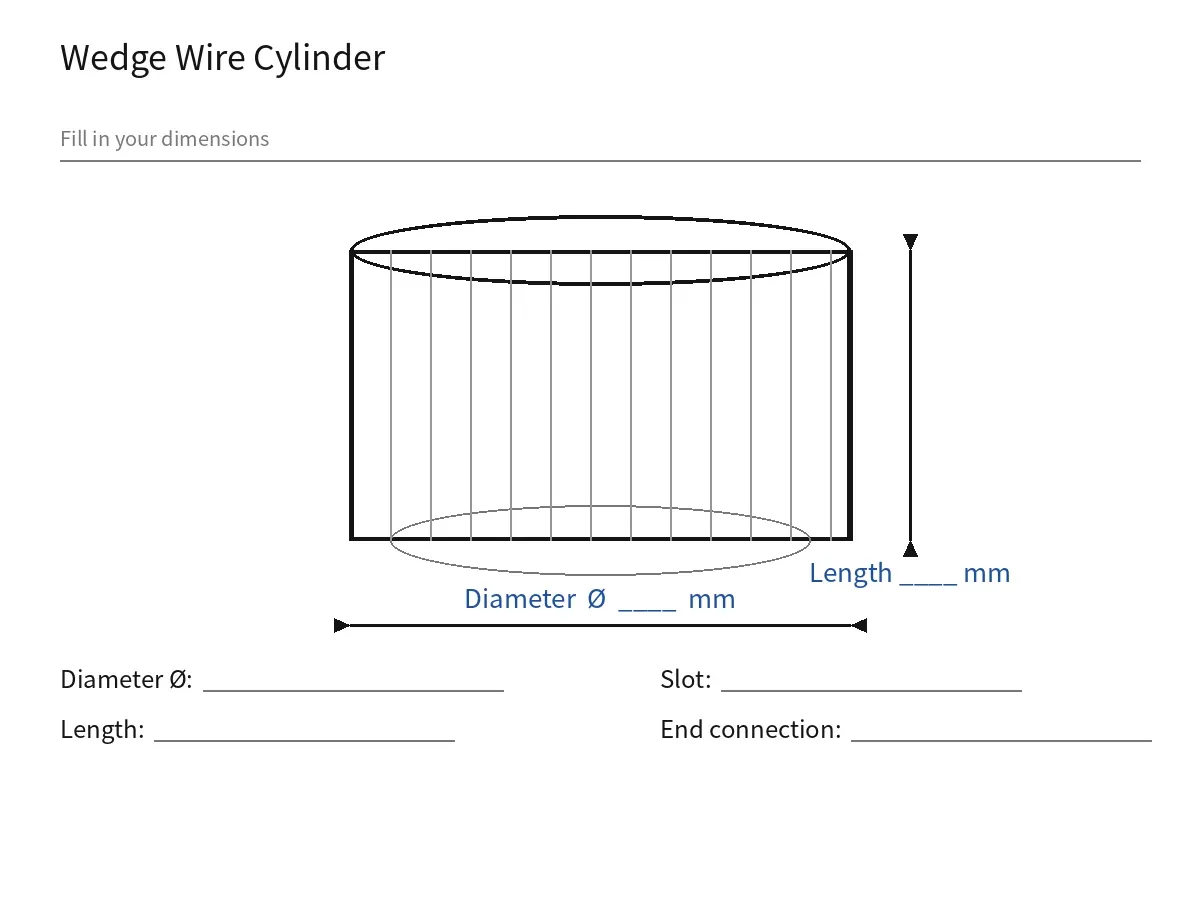
1. Diameter and length — outside / inside diameter and overall length.
2. Slot size and arrangement — radial or axial.
3. Working side and flow direction — FOTI (outside-to-in) or FITO (inside-to-out).
4. Internal or external supports.
5. End rings, flanges and connections — open or closed ends.
6. Installation position and quantity — where the cylinder sits, and how many per order.
Tools to send with your enquiry:
- **Blank dimension drawing** `blank-dimension-P09-cylinder.png` — fill in diameter, length, slot width and end connections and send it back.
- **RFQ sheet** (P09) — the same fields as a PDF, for buyers who prefer a form.
- **Sample** — samples are available on request; availability, fee and lead time depend on the product, size and quantity — send your specification and we will confirm. Standard sizes can usually be supplied quickly; custom sizes are made to your drawing.
Enquiry email: sales@anpingmeshpro.com — or use the enquiry form. We reply with the next details needed before a quotation is prepared.
## Customisation Topics
- Diameter, length and body form
- Slot requirement and arrangement
- Internal or external supports
- End rings, flanges and connections
- Working side and flow direction
## Questions About This Product
### What should the cylinder end photographs include?
Show the connection, ring, flange or closure at each end. Identify any end that is open and any features used to locate or secure the component.
### Why should I describe the flow direction?
It helps explain the working side of the cylinder and how the slot surface relates to the supports and installation.
### Can I enquire using an existing part number?
Include it as supporting information, together with the available drawing, photographs and dimensions. The physical construction still needs to be identified.
## Discuss Your Requirement
Send complete-cylinder and end views, with a drawing or flow-direction note where available. Email drawings or sample photographs to [sales@anpingmeshpro.com](mailto:sales@anpingmeshpro.com).