Replacement Screening Media
Woven Wire Screen Panels
Square-opening woven wire screen panel with hook edges and no polyurethane strips. Send length, width, aperture and wire diameter for a quote.
Specifications
- Aperture
- 2–120 mm (square openings, crimped wire)
- Wire diameter
- 0.9–12.5 mm (GKD heavy woven range); 1.25–12.5 mm (Major flat mesh range)
- Panel width
- Up to 2500 mm; rolls up to 30 m (GKD public range)
- Openings
- Square, crimped wire (standard); double weave / slotted options discussed per application
- Hook edges
- Hook edges for the screening equipment (standard)
- Materials to discuss
- By application — grade discussed with the enquiry
# Woven wire screen panels, made to your screening duty
## The challenge
A woven screen panel is the standard answer for aggregate screening — until the aperture, the wire or the duty changes. A new aperture trial, a worn panel that breaks, or a different feed size all come back to the same three numbers: opening size, wire diameter and hook-edge fit.
Get those three right and the panel does its job. Get one wrong and the panel either passes what it should hold, breaks early, or does not fit the machine at all.
## Our approach
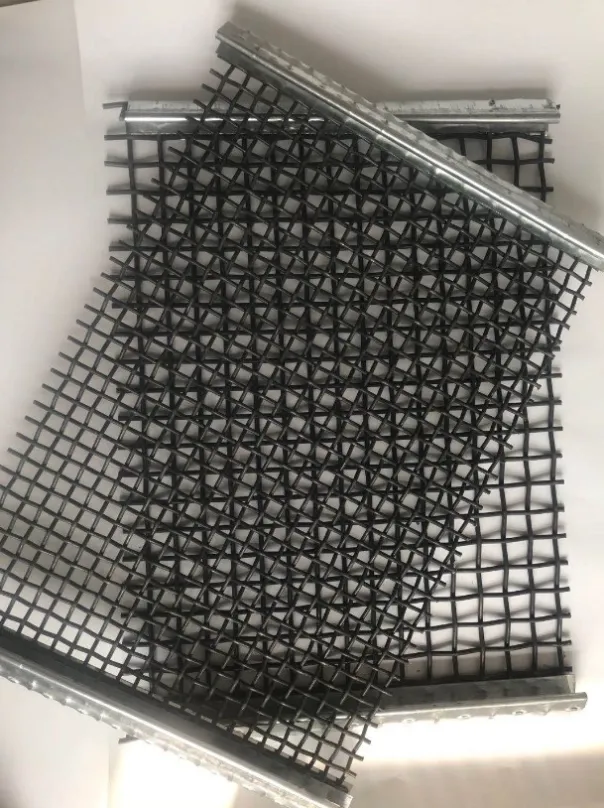
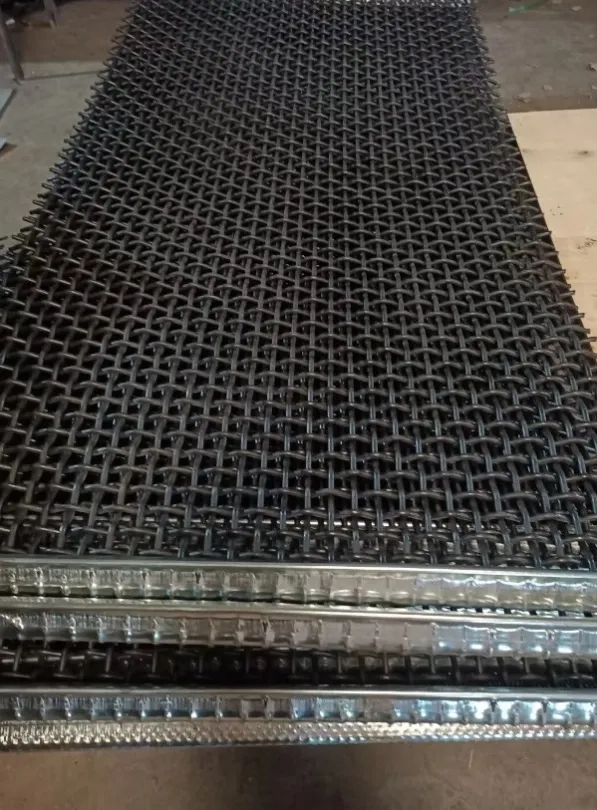
We supply custom woven wire screen panels from Anping, China. Each panel is made to order: square openings in crimped wire, with hook edges for the screening equipment — and no polyurethane strips.
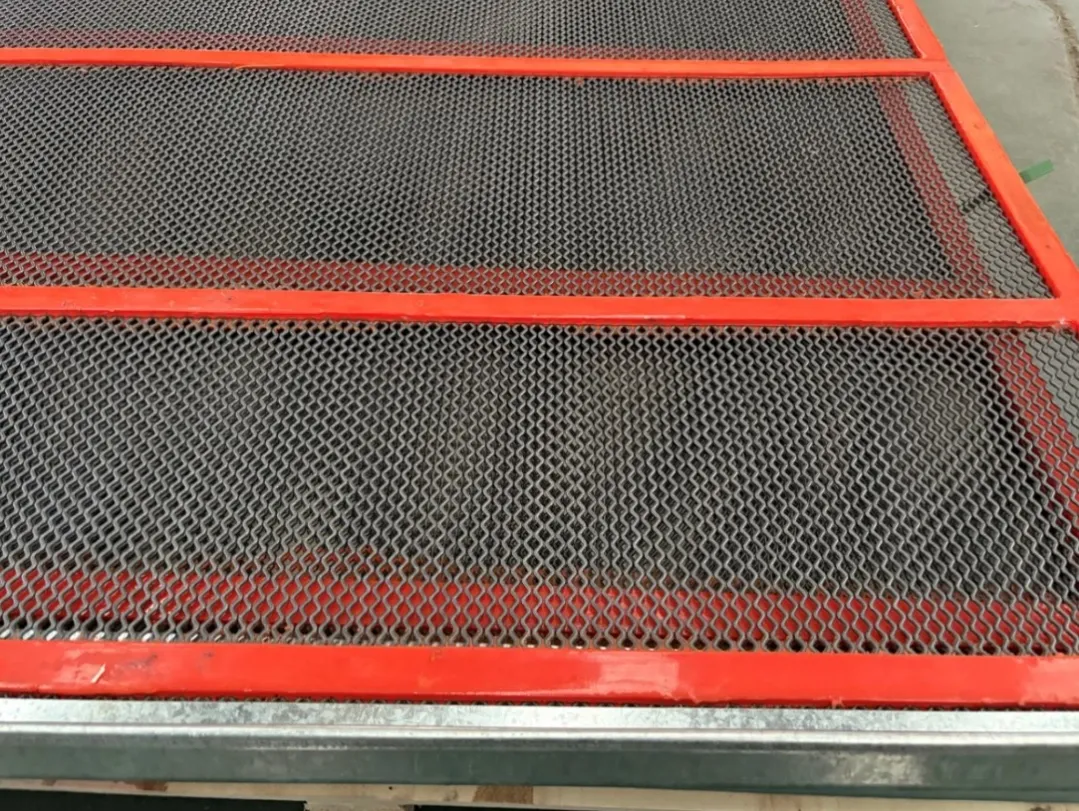
That last point is what sets this panel apart from a self-cleaning screen: a woven panel is the plain, standard construction. If the duty needs anti-blinding wire patterns, that is the M02 self-cleaning screen instead — photographs of the surface and edges usually make the type clear.
Panel dimensions, opening size, wire diameter and hook-edge arrangement are considered together. Include known measurements with units and indicate where they were taken. Photographs can be the starting point when the opening or wire size is unknown.
## Typical range
Final specification is confirmed per order / drawing. The ranges below are industry-common values from public supplier pages — they show what to discuss, not what we promise off the shelf.
| Item | Typical range |
|---|---|
| Aperture | 2–120 mm (square openings, crimped wire) |
| Wire diameter | 0.9–12.5 mm (GKD heavy woven range); 1.25–12.5 mm (Major flat mesh range) |
| Panel width | Up to 2500 mm; rolls up to 30 m (GKD public range) |
| Openings | Square, crimped wire (standard); double weave / slotted options discussed per application |
| Hook edges | Hook edges for the screening equipment (standard) |
| Materials to discuss | By application — grade discussed with the enquiry |
Sources for the ranges: Major flat mesh and rolls sales sheet, GKD heavy woven screens (public pages). Our factory-confirmed opening and wire ranges are still pending — final specification confirmed against your drawing / sample.
## What this helps with
- **Predictable screening** — square openings in crimped wire give a defined cut point for the material being screened.
- **Easy aperture trials** — a woven panel is the straightforward way to try a new aperture or a lower-throughput duty before committing to a different screen type.
- **Straightforward replacement** — the same hook-edge form as the panel being replaced, so the fit is checked against the machine, not guessed.
No screening-rate or lifetime figures are promised here: the result depends on the material, the feed size and the machine. The ranges in §3 and the questions in §6 are how we get to a panel that fits your duty.
## Typical applications
- **Quarry and aggregate screening** — ordinary woven panels on vibrating screens for gravel, crushed stone and ore.
- **Aperture trials** — trying a new opening size, or a duty where throughput requirements are modest.
- **Pulp and paper** — woven panels for pulp screening and stock grading.
Each application links back to the same enquiry: panel dimensions, opening size, wire diameter and the material being screened.
## Next step
Send the information you already have — a drawing, photographs of the complete panel, a close view of the woven surface and both hook edges, or a sample panel. These six questions are what we ask next:
1. Opening size and wire diameter — if known; photographs work as a starting point.
2. Panel dimensions and outline — width, length, and how many panels per order.
3. Hook or mounting edges — edge type and how the panel fixes to the machine.
4. Material being screened and wet or dry.
5. Operating concern — wear, breakage, or a trial of a new aperture.
6. Quantity per order.
Tools to send with your enquiry:
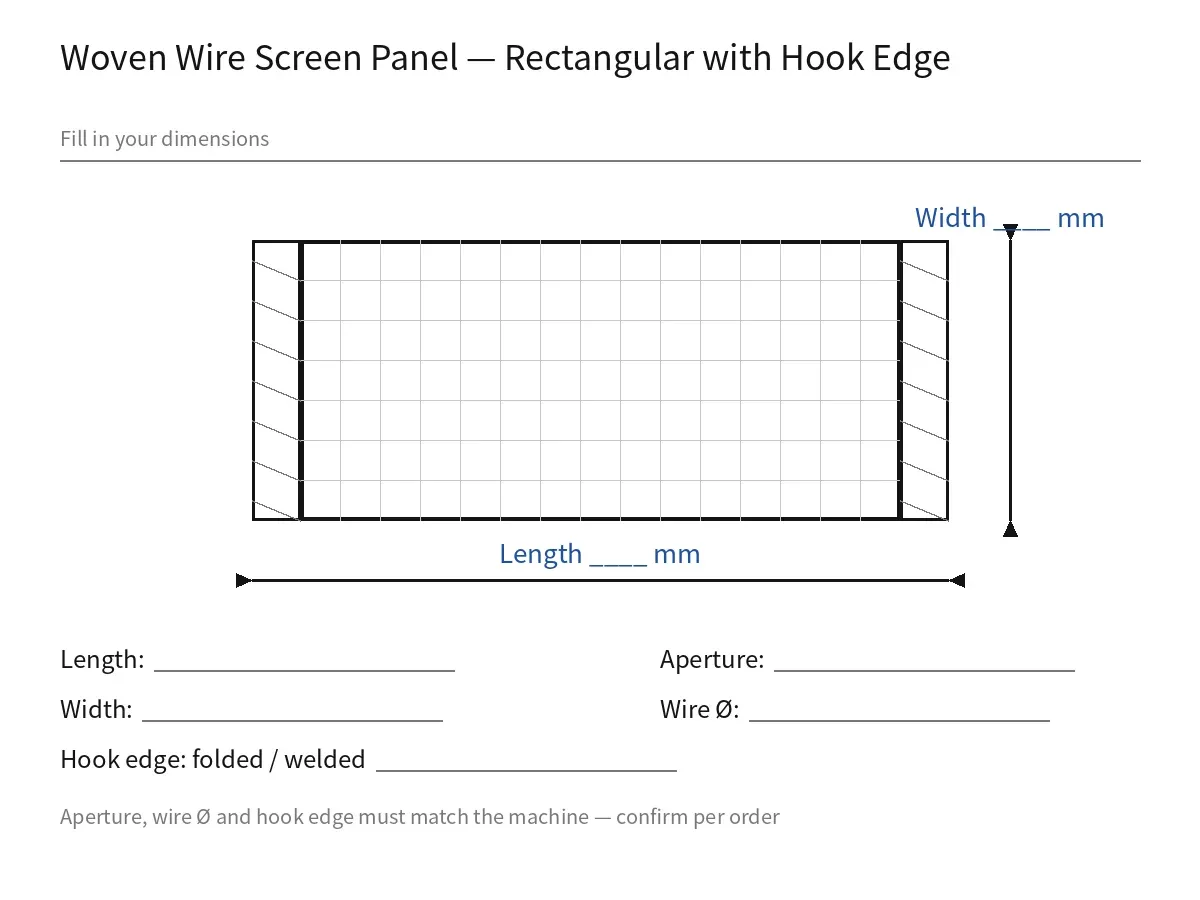
- **Blank dimension drawing** `blank-dimension-M01-panel.png` — the rectangular woven screen panel drawing (length, width, aperture, wire diameter, hook-edge type) — fill it in and send it back.
- **RFQ sheet** (M02, shared with the self-cleaning screen) — the same fields as a PDF, for buyers who prefer a form.
- **Sample** — samples are available on request; availability, fee and lead time depend on the product, size and quantity — send your specification and we will confirm. Standard sizes can usually be supplied quickly; custom sizes are made to your drawing.
Enquiry email: sales@anpingmeshpro.com — or use the enquiry form. We reply with the next details needed before a quotation is prepared.
## Customisation Topics
- Openings and wire diameter
- Hook or mounting edges
- Panel dimensions and outline
- Material and operating conditions being screened
## Questions About This Product
### How is a woven panel different from a self-cleaning screen?
A woven panel is ordinary crimped-wire mesh with square openings and hook edges, and it carries no polyurethane strips. Self-cleaning screens use wave, diamond-opening or harp-string wire patterns, with or without polyurethane support strips, to resist blinding and pegging. Photographs of the surface and edges usually make the type clear.
### Can I start without knowing the opening size or wire diameter?
Yes. Identify what is known and send clear photographs or an existing drawing. Any measurements still needed can then be discussed.
### What should I include in the photographs?
Show the complete panel, a close view of the woven surface and both hook edges. A view of the stacked panels is also useful when several panels share the same construction.
## Discuss Your Requirement
Share full-panel and fixing-edge photographs, with a dimensional sketch and screening task if available. Email drawings or sample photographs to [sales@anpingmeshpro.com](mailto:sales@anpingmeshpro.com).